
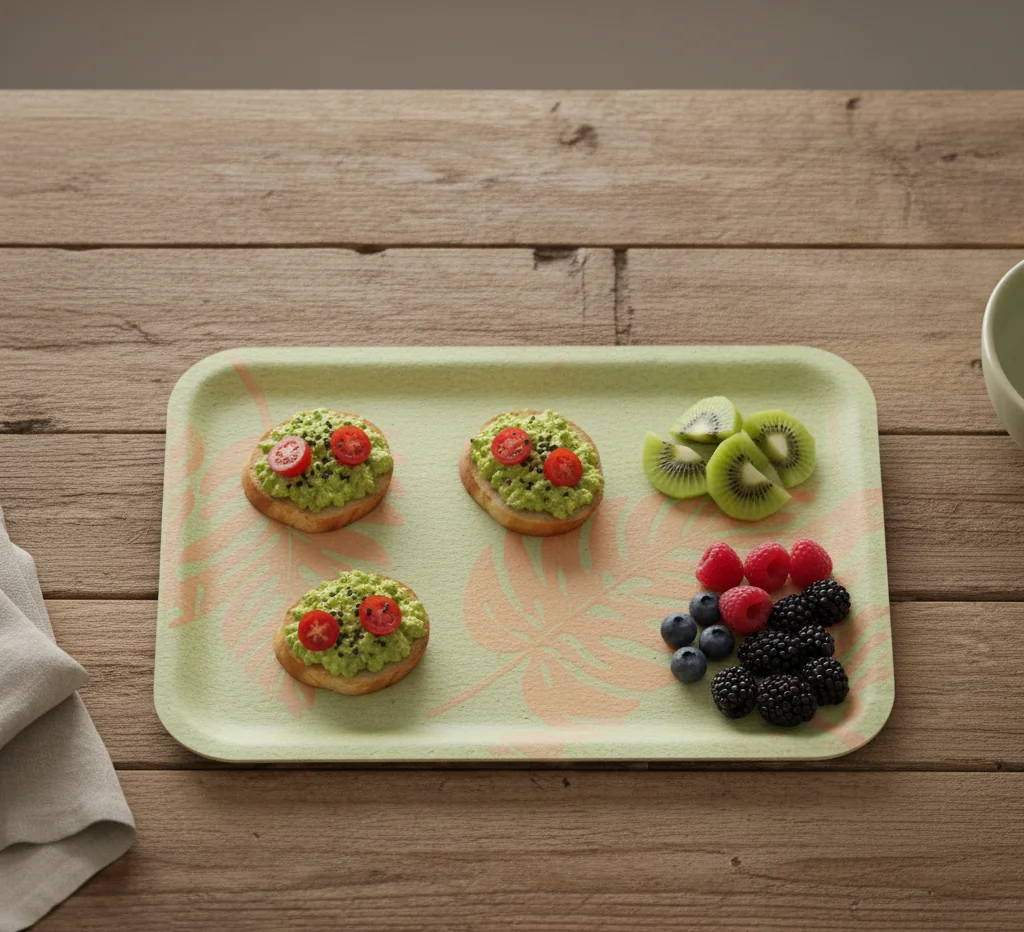
Sustainable trays emerge as a responsible alternative for food packaging. Made from recycled or natural-origin materials, they help minimize environmental impact and provide functionality both at home and in businesses. Choosing to use them is a step towards more respectful and conscious practices.
Features of Sustainable Trays
Sustainable trays are containers designed to minimize environmental impact throughout their entire lifecycle. Their production uses renewable, recycled, or easily recyclable resources, promoting the circular economy. These trays are intended for both domestic and professional use, meeting high standards of food safety and functional performance.
Differences with Traditional Trays
The main difference compared to conventional trays lies in the origin of the materials and the ecological focus. Traditional trays are usually made from petroleum-derived plastics that are not always recycled and generate long-lasting waste.
Conversely, sustainable trays prioritize renewable or recycled components and manufacturing processes with a lower carbon footprint. Additionally, many of them are biodegradable or compostable, facilitating their reintegration into the natural cycle and reducing waste accumulation.
Diversity of Materials: Cardboard, Molded Cellulose, Bamboo, Bioplastics
The variety of materials in sustainable trays responds to different needs:
- Recycled Cardboard and Paper: offer lightness and strength, with designs suitable for both cold and hot foods.
- Molded Cellulose: provides extra rigidity and protection, along with a pleasant natural finish to the touch.
- Bamboo: the renewable material par excellence, offers great hardness and moisture resistance, ideal for reuse.
- Bioplastics (PLA and others): derived from organic sources like corn, allow for the production of transparent, lightweight, and fully compostable trays.
These options adapt to various uses in hospitality, catering, office, and domestic environments, ensuring versatility and functionality without compromising respect for the environment. Recent advancements incorporate eco-design and customization technologies, making it possible to create sustainable trays that meet the strictest requirements in both product protection and presentation.
Environmental and Practical Advantages of Sustainable Trays
Contribution to the Reduction of the Ecological Footprint
The use of sustainable trays helps decrease waste generation and emissions associated with the product’s lifecycle. These containers, made from renewable, recycled, or easily compostable materials, require fewer resources in their production and integrate better into recycling and composting processes. This limits the accumulation of plastics and promotes more responsible consumption. Additionally, employing eco-friendly trays encourages the circular economy and efficient use of raw materials, supporting less carbon-intensive production systems.
Positive Impact of Eco-design on Packaging
Eco-design drives solutions that optimize both material and functional efficiency. Sustainable trays incorporate shapes designed to maximize space and adapt to efficient transport and storage. Many of these products manage to reduce the thickness of the material used while maintaining necessary resistance, which implies lower resource consumption and reduced volume of final waste. The design also prioritizes that containers are easy to dispose of correctly, with clear indications about recyclability or compostability, promoting more effective waste management.
Adaptability to Different Uses in Both Home and Offices
Sustainable trays adapt to multiple contexts and needs:
- Catering and Events: suitable for both cold and hot foods, and safe for food contact.
- Offices and Professional Settings: useful for serving meals or as object organizers.
- Domestic Use and Decoration: functional in the kitchen, food presentation or as a storage solution, adding aesthetic value due to their natural materials.
The versatility of sustainable trays allows responding to new consumption forms, such as home delivery or takeaway food, without compromising environmental respect. Thanks to their composition, these trays can be used once or multiple times depending on the material, offering utility, design, and lower impact on the environment. Companies like Greenuso’s commitment to sustainability drives the development of trays adapted to current needs, promoting a culture of responsible consumption in both homes and workspaces.

Benefits for Consumers and Businesses in Choosing Sustainable Trays
Improvement of Image and Corporate Social Responsibility
The adoption of sustainable trays contributes to strengthening the reputation of companies and brands, associating them with values like responsibility and environmental respect. For businesses, restaurants, and offices, the use of eco-friendly containers conveys a clear message of social commitment, highlighting concern for responsible resource management. This generates trust and preference from increasingly demanding consumers concerning the environment and sustainability. For domestic users, choosing sustainable products is perceived as an action consistent with a conscious and respectful life.
Attractive Price and Correct Quality-Price Ratio
Sustainable trays offer economic solutions without compromising quality or performance. Optimization of processes and the popularization of ecological materials have managed to present these products at affordable prices for households and businesses. Their durability and ease of recycling or composting make the investment worthwhile in the medium and long term, adding value with responsible behavior towards the environment.
Diverse Options for Customization and Local Production
The sustainable tray sector bets on flexibility, allowing adaptations in size, design, and functionality. Consumers and companies can choose from a wide range of models, suitable for all kinds of events, food uses, or organization. Additionally, these products often have options for visual customization, like logos or colors, and their production is usually local, reducing the logistical impact and supporting local economies.
Greenuso supports this evolution by providing sustainable trays that combine sustainability, design, and functionality, helping consumers and businesses actively move towards more responsible and circular consumption models.
Advances and Trends in the Use of Sustainable Trays
Recent Innovations in Materials and Design
The sustainable tray sector has undergone significant advances related to both materials and eco-design. In recent years, trays with state-of-the-art bioplastics have been developed that offer the same performance as conventional plastics, but are compostable and derived from renewable raw materials. Molded cellulose and recycled cardboard are evolving towards more durable finishes, resistant to liquids and fats, expanding uses for hospitality and catering.
The design also focuses on reducing the thickness of materials without losing resistance, facilitating compact stacking and efficient transport. Additionally, multifunctional and reusable tray solutions have been incorporated, allowing for the extension of their useful life in domestic and professional environments, which further reduces the volume of waste generated.
Another trend is ecological customization: printing with sustainable inks and custom die-cutting options allow the product to be adapted to specific needs with low environmental impact.
Key Distinctions: Recyclable, Biodegradable, Compostable
It’s important to distinguish between the most common terms related to sustainability:
- Recyclable: the tray can be placed in the appropriate container after use, entering an industrial process that turns it into new raw material.
- Biodegradable: the product decomposes naturally, under the action of microorganisms, but time and conditions may vary.
- Compostable: the tray, in addition to being biodegradable, can transform into compost under controlled conditions in industrial facilities or domestic composters, generating nutrient-rich fertilizer without leaving toxic residues.
Choosing the most suitable option depends on the use, available resources for waste management, and the environmental goals of each user or company.
Guide on Where to Acquire the Best Market Options
For those looking to incorporate sustainable trays into their daily lives, there are specialized portals and stores committed to the environment that facilitate the acquisition of these products for both domestic and professional use. It is advisable to prioritize sellers who offer clear information about the origin of materials, compostability and recyclability certificates, and local production options.
In this sense, Greenuso stands out by providing eco-friendly trays adapted to different needs. Its commitment to eco-design, sustainable production, and transparent supply makes it easier to find the most suitable option for each circumstance, thus contributing to more respectful consumption aligned with the circular economy.
Are they as safe as plastic trays?
Yes, they meet food safety standards and maintain food integrity.
Can they be used in a microwave and refrigerator?
Most are suitable, but it’s always recommended to read the manufacturer’s specifications.
What is the difference between compostable and biodegradable?
Compostable turns into fertilizer under specific conditions, biodegradable decomposes naturally but may take longer.