
Sugar cane has been part of everyday life and the economy in many countries. It is particularly noted for its use in sugar production and its derivatives, but today it goes much further: it offers nutritional benefits and new applications in the industry and the environment. Understanding its origin, advantages, and new uses helps explain why it remains relevant today.
Sugar cane is a perennial tropical grass plant known for its high stalks filled with sweet juice. Its cylindrical stalks can reach up to six meters in height and have a diameter between 2 and 5 centimeters. They have long, thin leaves, and at maturity, they develop flowering spikes.
Sugar cane is characterized by:
- Tall stalks formed by nodes and internodes filled with sap rich in sucrose.
- Long, narrow leaves that partially wrap around the stalk.
- Fibrous and superficial root system, adapted to wet soils.
- Tolerance to warm, sunny areas, making it suitable for tropical and subtropical regions.
Origin, Etymology, and Cultural Importance
The origin of sugar cane is located in Southeast Asia, especially in New Guinea and adjacent areas. From there, it spread to India and, subsequently, to regions such as the Near East and Europe. The word sugar derives from the Sanskrit śarkarā, which was adapted in various ancient languages.
Cane was fundamental in the history of different civilizations. Its introduction to Europe and America changed the agricultural economy and diet of millions of people. It was used as the primary source of sugar, a luxury good for centuries, and also as raw material for beverages and fuels. Its presence left its mark on the culture, gastronomy, and social practices of numerous regions around the world.
Today, sugar cane continues to be a species of great economic, social, and environmental value thanks to the versatility of its applications and its role in new sustainable alternatives.
Benefits of Sugar Cane for Food Packaging
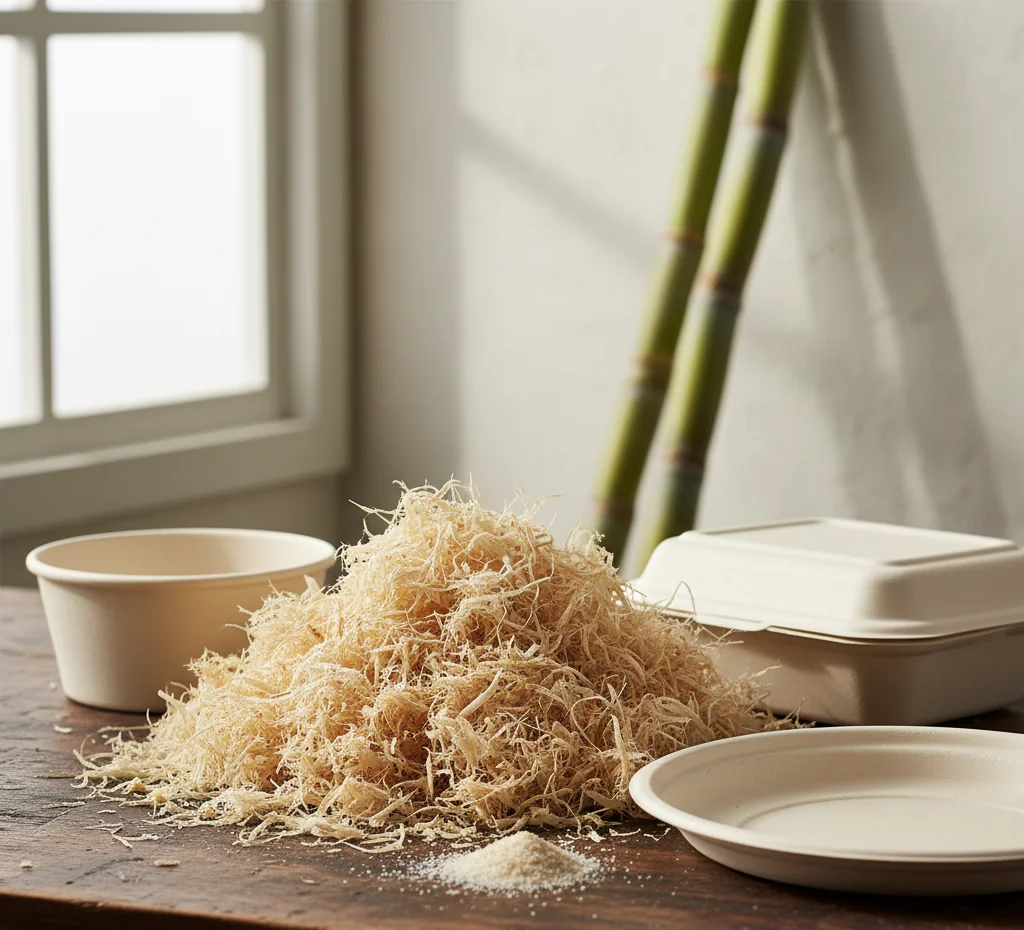
Sugar cane is not only used to obtain sugar and food products, but it is also valued in the production of sustainable food packaging. Its fiber and residue, known as bagasse, are used as raw materials in the eco-friendly packaging industry.
Description and Characteristics
The material resulting from sugar cane for food packaging is bagasse, which is obtained after extracting the juice from the stalks. This plant residue is light, moldable, and resistant to heat and moisture. Unlike petroleum-derived plastics, bagasse is compostable, meaning it can degrade under controlled conditions in a short period.
Improved Resistance and Sustainability
The packaging made from sugar cane presents:
- Good thermal resistance, suitable for containing both hot and cold foods.
- Ability to withstand liquids and oils without losing its integrity.
- Lower carbon footprint compared to traditional materials.
In hospitality, this translates into more durable packaging suitable for multiple uses without losing structural properties.
Environmental Contribution Compared to Other Packaging
The use of sugar cane represents a significant advance in environmental terms:
- Reduction of plastic waste: Facilitates the transition to biodegradable and compostable materials.
- Utilization of by-products: Uses residues from the sugar industry, promoting the circular economy.
- Lower fossil fuel consumption, as the raw material is renewable and local in many regions.
Unlike other conventional packaging, sugar cane packaging integrates easily into industrial composting processes and reduces environmental impact throughout its life cycle.

Examples of Products in Hospitality
In hospitality and catering, sugar cane packaging is widely used in products such as:
- Disposable plates and trays
- Cups for hot or cold beverages
- Takeaway food boxes
- Eco-friendly cutlery
These alternatives allow offering a safe and practical service without sacrificing respect for the environment. Companies like Greenuso encourage the use of these materials in the sector, contributing to the shift towards responsible and sustainable consumption.
Main Uses and Applications of Sugar Cane
Sugar cane is a highly versatile crop that offers multiple utilities both in food and industry. Its relevance has gone beyond direct human consumption, opening doors to sustainable applications and alternatives to traditional materials.
Industrial Applications: Biofuels and Bioplastics
In recent years, sugar cane has been consolidated as a renewable source for non-food products. It is especially useful for biofuels such as ethanol, obtained from the fermentation of juice or molasses and used as an alternative to traditional gasoline. Bagasse, the fibrous residue after juice extraction, has energy value, as it can be burned to produce electricity or heat.
Additionally, its fiber is used in the creation of bioplastics and compostable materials. These products replace conventional plastic in packaging, containers, disposable tableware, and other items, reducing the use of non-renewable materials.
The comprehensive use of sugar cane reinforces its role in the transition towards responsible consumption models and the promotion of the circular economy.