
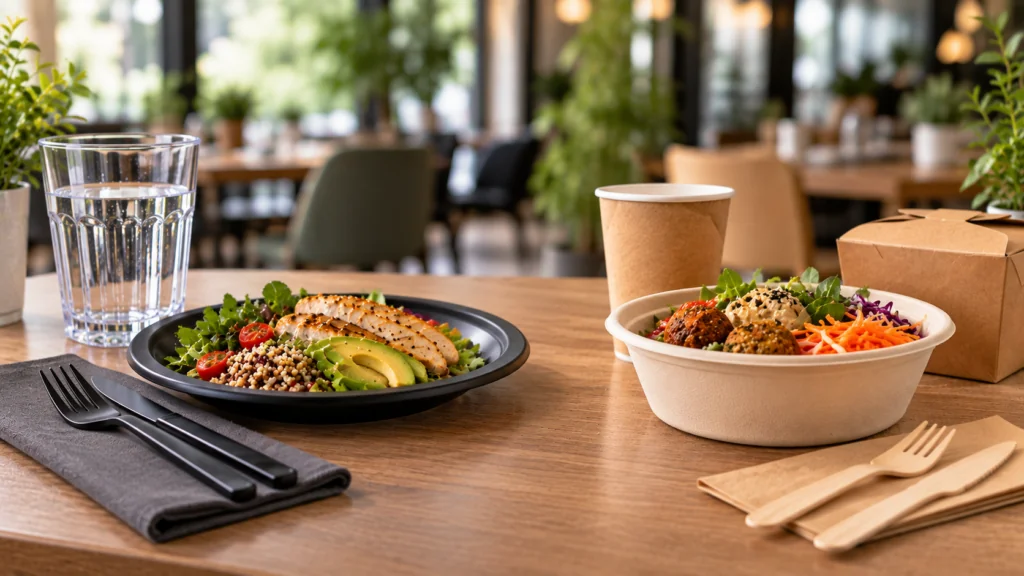
Reusable or disposable tableware is an important choice in the hospitality sector, as it affects day-to-day operations, costs, presentation and waste management.
There is no single solution that suits every business. A restaurant offering table service has very different needs from a delivery operation, food truck or catering service. Before making a decision, it is therefore important to consider the type of service, customer numbers, available space and the experience you want to offer.
Differences Between Reusable and Disposable Tableware
What Is Considered Reusable and Disposable Tableware?
Reusable tableware is designed to be used repeatedly and then used again after appropriate washing and maintenance. It is common in restaurants, bars, cafés and hotels where food and drink are consumed on the premises.
It includes, for example:
- Plates and bowls.
- Glasses and cups.
- Cutlery.
- Trays and other serving items.
Disposable or single-use tableware, on the other hand, is intended for one service and is then managed as waste according to the material from which it is made.
It is particularly common in:
- Delivery and takeaway services.
- Catering.
- Events.
- Food trucks.
- Services with temporary peaks in customer numbers.
Common Materials Used for Each Type of Tableware
Reusable tableware is generally made from materials designed to withstand many cycles of use, such as porcelain, glass, stoneware, melamine and stainless steel.
Disposable tableware is available in materials including paper, cardboard, bagasse, wood, bamboo and certain types of plastic, among others.
The properties of each product and the way it should be managed at the end of its useful life depend on its specific composition. It is therefore important to check the characteristics and intended conditions of use of each item.
Key Differences in Use, Maintenance and Logistics
The main difference lies in how each option fits into the day-to-day operation of the business.
Reusable tableware requires a sufficient number of items, adequate storage space and suitable washing and drying facilities. In return, it can be used over many cycles and helps provide a consistent presentation for table service.
Disposable tableware removes the need for washing after use and can simplify fast service or food consumed away from the premises. However, businesses need to maintain sufficient stock and manage the resulting waste correctly.
The decision should therefore not be based on purchase price alone, but on the total cost per service and the actual needs of the business.
Reusable Tableware in Hospitality: Advantages and Disadvantages
Reusable tableware is generally the preferred option when food is consumed on the premises and presentation forms part of the dining experience.
Durability and Resistance for Frequent Use
Materials such as porcelain, glass, stoneware, melamine and stainless steel can withstand many cycles of use when used in accordance with their specific properties.
Key advantages include:
- The same items can be used across many services.
- Less frequent replacement is required.
- It helps create a consistent and well-presented table setting.
- A wide variety of designs, shapes and finishes is available.
Potential breakages, losses and wear should also be taken into account, so it is important to choose materials suited to the pace and intensity of each operation.
Initial Cost and Long-Term Cost
Reusable tableware generally requires a higher initial investment than a single-use solution.
However, because it can be used repeatedly, its cost per service may decrease over time. To assess its true cost-effectiveness, businesses should consider:
- Purchase price.
- Estimated number of uses.
- Breakages and replacements.
- Water and energy consumption.
- Detergents.
- Washing equipment.
- The time and staff required for its management.
For this reason, reusable tableware can be particularly suitable for businesses with a stable and regular volume of service.
Cleaning, Hygiene and Maintenance
After each use, reusable tableware must undergo appropriate cleaning and maintenance procedures.
This requires:
- Washing systems suited to the volume of service.
- Space to separate and store tableware correctly.
- Appropriate handling and hygiene procedures.
- Materials compatible with the cleaning methods used.
It is also important to follow the conditions of use specified for each product, particularly regarding temperature, microwave and dishwasher suitability, and contact with different types of food.
Common Materials Used for Reusable Tableware
Materials commonly used in hospitality include:
- Porcelain: widely used in restaurants for its finish and variety of designs.
- Glass: used for drinking glasses, bowls and certain containers.
- Melamine: lightweight and impact-resistant, commonly used in contract catering, buffets and other professional settings.
- Stainless steel: particularly common for cutlery and serving items.
- Earthenware and stoneware: frequently chosen by restaurants looking for a more traditional or handcrafted presentation.
The choice should always take into account the specific properties of each material and its intended use.
Disposable Tableware in Hospitality: Advantages and Disadvantages
Single-use tableware is valued for its practicality and can make service easier when customers consume food away from the premises or when recovering and washing items is not practical.
Speed and Practicality of Service
One of its main advantages is that it does not need to be returned to the premises for washing and reuse.
It can be particularly useful for:
- Delivery.
- Takeaway.
- Catering.
- Events.
- Festivals.
- Food trucks.
- Temporary services or operations with significant fluctuations in demand.
It also enables businesses to respond quickly to temporary increases in order volumes.
Common Materials Used for Disposable Tableware
Today, there are numerous options made from different materials:
- Paper and cardboard: commonly used for cups, plates, trays and other formats.
- Bagasse: a plant fibre derived from sugar cane and used in many foodservice products.
- Wood: particularly common for cutlery and small accessories.
- Bamboo: used for certain presentation and serving items.
- Plastics: still used in certain permitted applications, depending on the product and the applicable regulations.
Some products may be recyclable or compostable depending on their composition, certification and the waste management systems available.
It is therefore important to check the specific characteristics of each product and not assume that all items made from the same material should be managed in the same way.
Cost Per Service and Storage
Disposable tableware does not require a significant investment in washing equipment, but it does create a recurring cost for every service.
When assessing its economic impact, businesses should consider:
- Unit price.
- Number of units used.
- Reordering frequency.
- Storage space required.
- Waste management after use.
One advantage is that purchasing volumes can be adjusted relatively easily to match expected demand.
Waste Management and Alternatives with a Lower Environmental Impact
Correct waste management is one of the main considerations when using single-use products.
When choosing an item, it is important to consider:
- The material used.
- The actual conditions of use.
- Available collection and waste management options.
- End-of-life instructions.
- Relevant certifications or specific product characteristics, where applicable.
Greenuso offers different solutions for hospitality businesses looking to adapt their single-use service to their operational and environmental requirements.
Common Uses in Delivery, Takeaway, Catering and Events
Disposable tableware can be particularly practical when service takes place away from the premises or when there is no suitable infrastructure for collecting and washing items.
For delivery and takeaway, it makes serving and transporting food easier, provided the format is appropriate for the type of food being served.
In catering, it can simplify the organisation of services involving large numbers of guests or multiple locations.
At events, festivals and outdoor celebrations, it can make logistics easier when collecting and washing tableware would otherwise be difficult.
Reusable vs Disposable Tableware: Which Option Is More Suitable?
There is no single answer. The best choice depends on how the business actually operates.
Initial Cost and Long-Term Cost
Reusable tableware:
- Higher initial investment.
- Cost per use may decrease as the number of services increases.
- Washing, maintenance and replacement costs need to be considered.
Disposable tableware:
- Lower initial investment.
- Recurring cost for each service.
- Purchasing volumes can be adjusted relatively easily to demand.
Hygiene and Maintenance
Reusable tableware:
- Requires appropriate washing and handling after each service.
- Requires space and suitable equipment.
Disposable tableware:
- Does not require washing after use.
- Must be stored and handled correctly before use.
Logistics and Service Volume
Reusable tableware requires businesses to organise the collection, washing, drying and storage of used items.
Disposable tableware simplifies these processes, although sufficient stock must be kept available and the waste generated after service must be managed correctly.
In businesses with stable demand, reusable tableware can be easily incorporated into normal day-to-day operations. When volumes vary significantly or food is served away from the premises, single-use solutions can provide greater flexibility.
Customer Experience and Presentation
Reusable tableware is often associated with traditional table service and offers a wide choice of materials and presentation styles.
Disposable tableware provides a different experience, but there is now a broad range of designs, formats and personalisation options capable of creating a highly polished presentation.
The right choice depends on the image the business wants to convey and the context in which the food will be consumed.
Waste Generation and Environmental Impact
Environmental impact cannot be assessed simply according to whether a product is reusable or disposable.
For reusable tableware, relevant factors include:
- Number of use cycles.
- Lifespan.
- Water and energy consumption.
- Transport.
- Washing processes.
For single-use tableware, businesses should consider:
- Raw materials.
- Amount of material used.
- Transport.
- Waste management.
- Actual recycling or composting options, where applicable.
It is therefore important to consider the full life cycle of each solution and to use each product in accordance with its intended purpose.
Which Tableware Should You Choose for Each Type of Business?
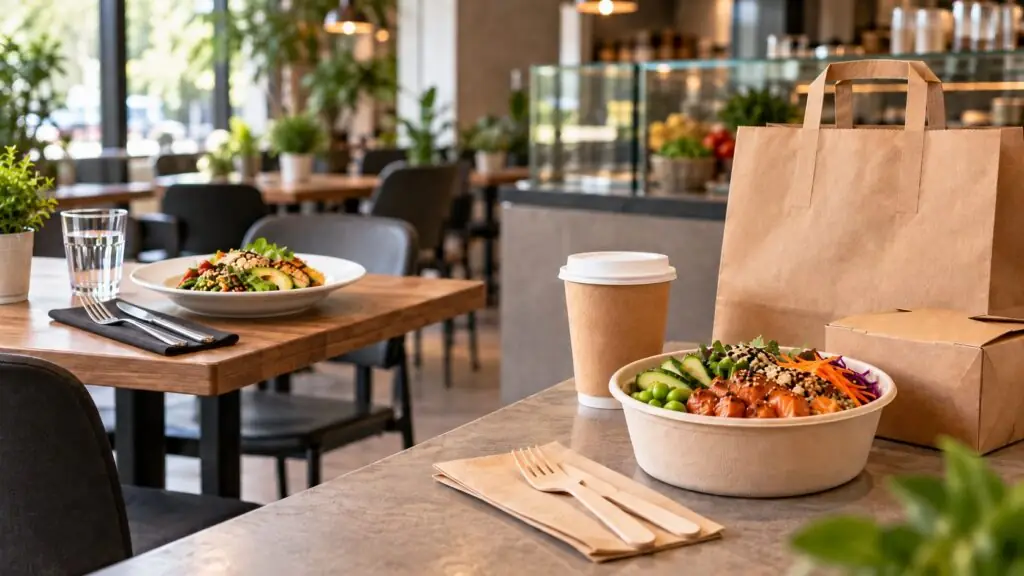
Restaurants with Table Service and Fine Dining
In restaurants where presentation and the dining experience play an important role, reusable tableware is generally the preferred option.
Porcelain, glass, stoneware and other materials make it possible to tailor presentation to the identity of the restaurant and the style of cuisine.
Bars, Cafés and Casual Restaurants
In these businesses, combining different solutions can be particularly useful.
Reusable tableware is well suited to regular on-premises dining, while single-use products can be reserved for:
- Takeaway orders.
- Delivery.
- Certain outdoor or terrace services.
- Temporary peaks in demand.
Delivery and Takeaway
For orders leaving the premises, single-use solutions remain among the most common options because of their convenience for transport and service.
Each product should be selected according to:
- Type of food.
- Temperature.
- Quantity.
- Presence of liquids or fats.
- Expected transport time.
- Required closure system.
In addition to tableware, the packaging and accessories used must protect food properly during transport.
Catering and Events
Both reusable and single-use solutions can be used in sustainable catering.
The choice will depend mainly on the type of event, the number of attendees and the infrastructure available.
A seated banquet may be better suited to reusable tableware, while a festival, informal reception or outdoor event may benefit from disposable solutions that simplify service and logistics.
When to Combine Reusable and Disposable Tableware
In many businesses, there is no need to choose exclusively between one option and the other.
A mixed approach can be the most practical solution:
- Reusable tableware for on-premises dining.
- Single-use packaging and tableware for takeaway and delivery.
- Disposable solutions for events or temporary peaks in demand.
- Reusable options for services where presentation is a priority.
This combination makes it possible to adapt resources to each situation without disrupting the normal operation of the business.
Key Factors When Choosing Tableware for Hospitality
Before making a decision, several factors should be considered.
Type of Service and Customer Numbers
A restaurant with a stable number of on-site customers does not have the same requirements as a food truck or a business focused primarily on delivery.
The more demand fluctuates, the more important the flexibility of the chosen solution becomes.
Budget and Cost Per Service
Do not compare purchase prices alone.
For reusable tableware, washing, replacement and maintenance costs should also be included. For disposable tableware, businesses should calculate the number of units consumed over time.
Assessing the total cost per service provides a more realistic comparison.
Space Available for Storage and Washing
Reusable tableware requires space for:
- Storage.
- Collection of used items.
- Washing.
- Drying.
- Movement between clean and dirty areas.
Disposable tableware reduces some of these requirements, although sufficient space is still needed to store new stock.
Food Safety and Hygiene Requirements
All items intended to come into contact with food must be suitable for that purpose and used in accordance with the conditions specified for each product.
Before choosing an item, it is important to check factors such as:
- Intended temperature range.
- Suitability for hot or cold food.
- Microwave or dishwasher suitability, where applicable.
- Storage conditions.
- Manufacturer’s instructions.
Materials and articles intended to come into contact with food must also comply with the relevant applicable regulations.
Aesthetics and Customer Experience
Tableware forms part of the identity of a hospitality business.
Material, design, colour and format can influence how a dish is perceived and the overall customer experience.
For delivery and takeaway services, packaging and accessories also perform this role by presenting and transporting the order.
Business Sustainability Goals
Sustainability should be assessed according to how each product is actually used.
With reusable tableware, businesses should aim to maximise product lifespan and optimise washing processes. With single-use tableware, it is important to choose suitable materials and formats and enable appropriate waste management after use.
Reusable or Disposable Tableware? The Choice Depends on Your Service
There is no single solution that suits every business.
Reusable tableware is particularly well suited to businesses offering on-premises dining, with relatively stable demand and the facilities needed for washing and storage.
Disposable tableware can be particularly practical for takeaway, delivery, catering, events and other situations where products leave the premises or where recovering items would be logistically difficult.
Many businesses can benefit from combining both approaches: reusable tableware for regular table service and single-use solutions for takeaway orders, events or temporary periods of high demand. To make the right decision, consider the total cost per service, available infrastructure, food safety, the experience you want to offer customers and how each product will be managed after use.The best tableware is not necessarily reusable or disposable: it is the option that best suits the way each business actually operates.