

Biodegradable stirrers are a responsible option for those looking to reduce their environmental impact. They are made from environmentally friendly materials and offer an alternative to traditional plastics. In this guide, you will discover their types, advantages, and tips for choosing the best ones according to your needs.
Features of Biodegradable Stirrers
Definition and Description of Biodegradable Stirrers
Biodegradable stirrers are utensils designed to stir and mix beverages, made from materials that can naturally decompose after use. Their purpose is to minimize the environmental impact associated with the disposal of conventional plastics, as they cease to be pollutant waste after a short time when exposed to the right conditions.
These products are especially useful in coffee shops, events, or environments where quick beverage consumption requires practical and sustainable solutions.
Types of Materials Used
Biodegradable stirrers can be made from different materials, each with its particularities regarding sustainability, resistance, and degradation process:
Wood
Renewable material sourced from responsibly managed forests. It is one of the most popular options due to its ability to biodegrade quickly and its natural appearance, which conveys an eco-friendly and simple image.Biodegradable Plastic (PLA and other bioplastics)
Polylactic acid (PLA) and other bioplastics are made from plant-based resources like corn starch, sugarcane, or potato starch. These materials replicate the characteristics of traditional plastics but allow controlled degradation in industrial composting conditions, reducing persistent waste.Other Alternatives
Options based on plant fibers, such as bamboo or treated agricultural residues, enhance circularity and waste reduction. These formats use agricultural by-products to create durable and biodegradable utensils.
Specific Characteristics of Each Material
Wood Stirrers
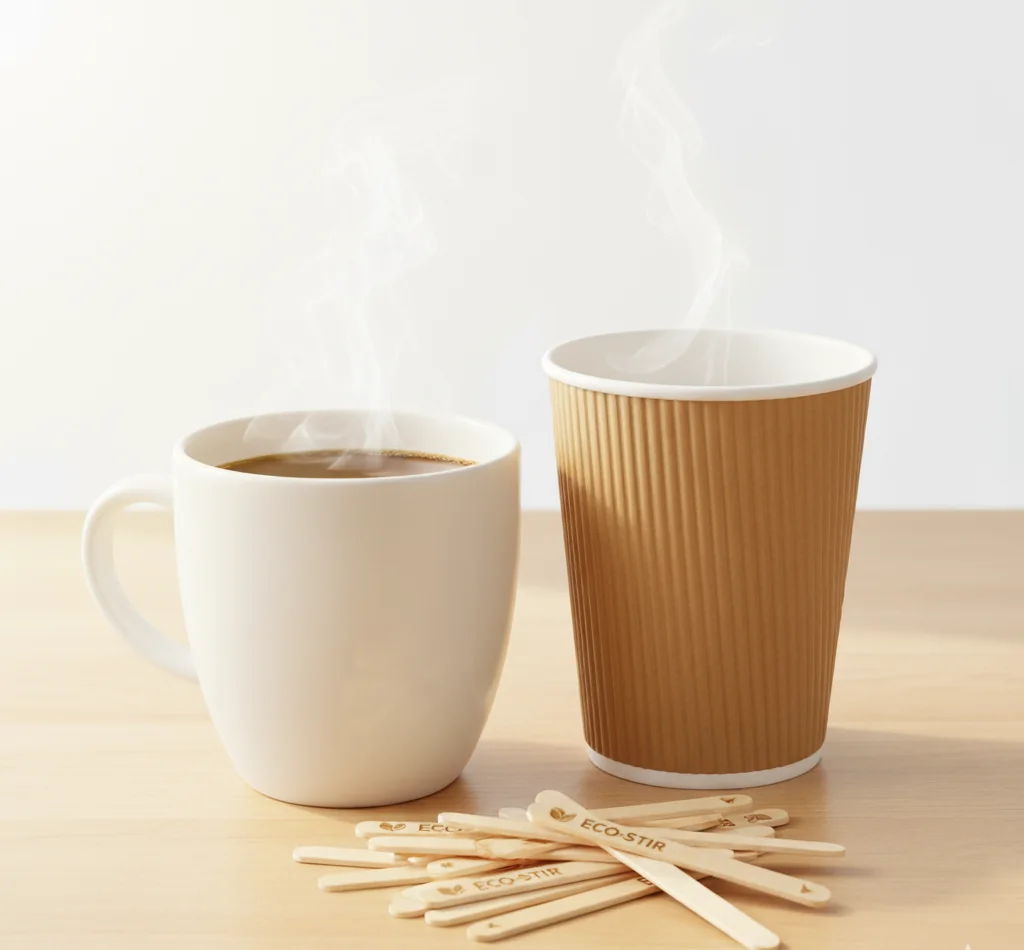
They are sturdy, do not transmit flavors, and are suitable for both hot and cold beverages. They have softer edges after the manufacturing process, avoiding splinters, making them pleasant to touch. Their degradation can be completed in a few weeks in composting conditions or even when discarded in organic household waste.Biodegradable Plastic Stirrers
Visually similar to conventional plastic ones, they can be transparent or tinted. They offer good mechanical resistance to hot or cold beverages, although they may lose rigidity if the temperature is very high for prolonged periods. Industrial composting facilities are required for their complete degradation, as this process is slower at room temperature.Other Plant Alternatives
They integrate the material’s resistance and a complete eco-friendly life cycle. They can have more rustic finishes and vary in hardness according to the pressing process. Some models can even be composted at home, provided they do not contain synthetic residues.
These features make biodegradable stirrers a reliable and conscious alternative to traditional plastic stirrers, contributing to reducing the environmental footprint and facilitating proper waste management in everyday life.
Advantages of Biodegradable Stirrers
Comparison with Conventional Stirrers
Biodegradable stirrers have clear advantages over conventional plastic ones. Mainly, they contribute to reducing the volume of plastic waste by decomposing naturally and quickly without releasing microplastics. They integrate better into organic recycling and composting systems, while traditional stirrers remain unchanged for decades. Choosing these products means adapting to European regulations, which restrict single-use plastics in hospitality and collective services.
Resistance in Hot and Cold Beverages
Both wood and bioplastic stirrers maintain their integrity in hot and cold beverages. Wood does not soften with use or transmit flavors, even in coffee or infusions. Bioplastics have improved their composition, withstanding high temperatures without deforming during the necessary stirring time. This ensures a practical experience in any circumstance without sacrificing user comfort.
Durability and Versatility in Different Scenarios
- Use in Coffee Shops, Hotels, Offices, and Vending
- Application in Events, Caterings, and Take Away
- Visual Appeal that Enhances the Eco Image of Any Establishment
The durability of biodegradable stirrers is sufficient for the intended use, without unexpected breakage or premature wear. Their simple and neutral design allows them to be adapted to different service styles, from vending machines to breakfasts in hospitality or events for companies committed to sustainability. Additionally, they are usually presented in recyclable or compostable packaging, increasing the added value throughout the product’s lifecycle.
Using biodegradable stirrers not only represents a responsible gesture towards the environment but also an effective response to new consumption needs and legal requirements seeking to eradicate the use of disposable plastics.
Benefits of Using Biodegradable Stirrers
Positive Environmental Impact
The use of biodegradable stirrers reduces the volume of persistent waste in nature and limits pollution derived from conventional plastics. Being made from plant-based and compostable materials, they help keep ecosystems cleaner and contribute to global sustainability. This reduces the carbon footprint and promotes a circular consumption model, where products return to the environment without leaving toxic residues or microplastics.
Faster and More Effective Degradation Process
Under suitable conditions, biodegradable stirrers complete their decomposition in weeks or a few months, far from the years required for traditional plastic to degrade. Wood and bioplastic options, such as those based on polylactic acid, integrate quickly and naturally into industrial or domestic composting processes. This optimized degradation rate facilitates waste management in both domestic environments and large communities, helping reduce landfill overload.
Compliance with Regulations and Obtaining Eco Certifications
Adopting biodegradable stirrers allows businesses and consumers to comply with European legislation prohibiting single-use plastics and advocating for sustainable alternatives. Many models have certifications that guarantee their compostability and production under environmentally respectful standards. These certifications, promoted by internationally recognized seals, ensure user trust and demonstrate commitment to responsible practices aligned with current eco market expectations.
Choosing biodegradable stirrers promotes environmental protection, accelerates waste disappearance, and facilitates compliance with regulations, reinforcing the commitment to a healthier and more sustainable future.
Guide for Biodegradable Stirrers Consumers
Differences and Options Available in the Market
In today’s market, there are various biodegradable stirrer options tailored to the needs of coffee shops, offices, and homes:
- Wood Stirrers: Characterized by their resistance, lack of flavor, and natural appearance. They are ideal for hot and cold beverages and visually reinforce any business’s ecological message.
- Bioplastic Stirrers (PLA or Other Vegetable Polymers): They replicate the appearance of traditional plastic ones, but their composition allows for faster degradation in industrial composting facilities.
- Formats and Sizes: Stirrers can be found in different lengths and thicknesses, designed to fit small coffee cups, infusions, or larger beverages. Additionally, they are available in various package sizes, from small boxes to industrial batches.
- Customized Options: Some manufacturers offer customizable stirrers with logos or other messages, using compostable-friendly inks.
Common Questions About Biodegradable Stirrers
Efficiency and Real Compostability of Stirrers
Biodegradable stirrers effectively perform their function, allowing the stirring of both hot and cold beverages without losing integrity. They are suitable for different scenarios and maintain resistance for the duration of typical coffee or infusion consumption. In terms of compostability, their degradation depends on the material:
-Wood or plant fiber stirrers can be composted at home or in industrial plants, disintegrating in weeks or a few months.
-Bioplastic stirrers, such as PLA, require industrial composting facilities for rapid transformation into compost. In domestic settings, this process is slower but still does not leave permanent residues.
Possible Alteration of Flavor in Beverages?
Wood stirrers are treated to prevent flavor transfer to coffee, tea, or other beverages. However, it is common for some consumers to detect a slight natural nuance, generally neutral and not harmful. Bioplastic and other plant fiber stirrers do not alter the flavor or chemically interact with liquids, ensuring an experience identical to that of traditional plastic stirrers.