

More businesses are seeking to reduce their environmental impact. Eco-friendly cutlery offers an alternative to traditional plastic ones, helping to decrease waste. Discover here the most commonly used biodegradable options in hospitality, their advantages, and how to choose the best one for your establishment.
Eco-friendly cutlery is made from renewable and environmentally friendly materials. They are known for their ability to biodegrade in natural conditions, meaning they break down quickly without leaving toxic residues. The most common materials in these cutlery options include PLA (polylactic acid), bamboo, wood, and wheat straw.
Main characteristics of eco-friendly cutlery:
- Made from plant-based or sustainably sourced raw materials.
- Completely biodegradable and compostable.
- Free from petroleum-derived plastics.
- Suitable for both cold and hot foods.
Some models even have certifications ensuring responsible production processes and the absence of harmful chemicals.
Key Differences from Traditional Cutlery
Unlike conventional plastic cutlery, eco-friendly ones do not generate microplastics or take centuries to degrade. The production of biodegradable cutlery involves less use of fossil resources and avoids harmful emissions throughout their lifecycle. Additionally, they often offer more natural and pleasant finishes to the touch.
Quick Comparison:
- Eco-Friendly Cutlery: Decompose in weeks or a few months in appropriate conditions. Made from plant-based materials, without releasing harmful substances.
- Traditional Plastic Cutlery: Persist in the environment for hundreds of years. Fossil origin, release microplastics and pollutants.
This difference is in response to a growing social and legal demand to reduce single-use plastics, especially in hospitality and catering.
Environmental and Functional Benefits of Using Eco-Friendly Cutlery
Using eco-friendly cutlery provides benefits both environmentally and functionally:
Environmental Advantages:
- Help reduce carbon footprint.
- Promote circular economy through composting.
- Reduce plastic waste accumulation.
Functional Advantages:
- Suitable for food contact, durable, and pleasant to use.
- Do not alter the taste or smell of food.
- Variety of options to meet multiple needs in dining, events, and catering.
Opting for eco-friendly cutlery in hospitality enhances the sustainable commitment image of each business and meets new customer and regulatory demands. Greenuso, with its history and values, is committed to providing respectful and effective solutions, facilitating the transition to hospitality without conventional plastics.
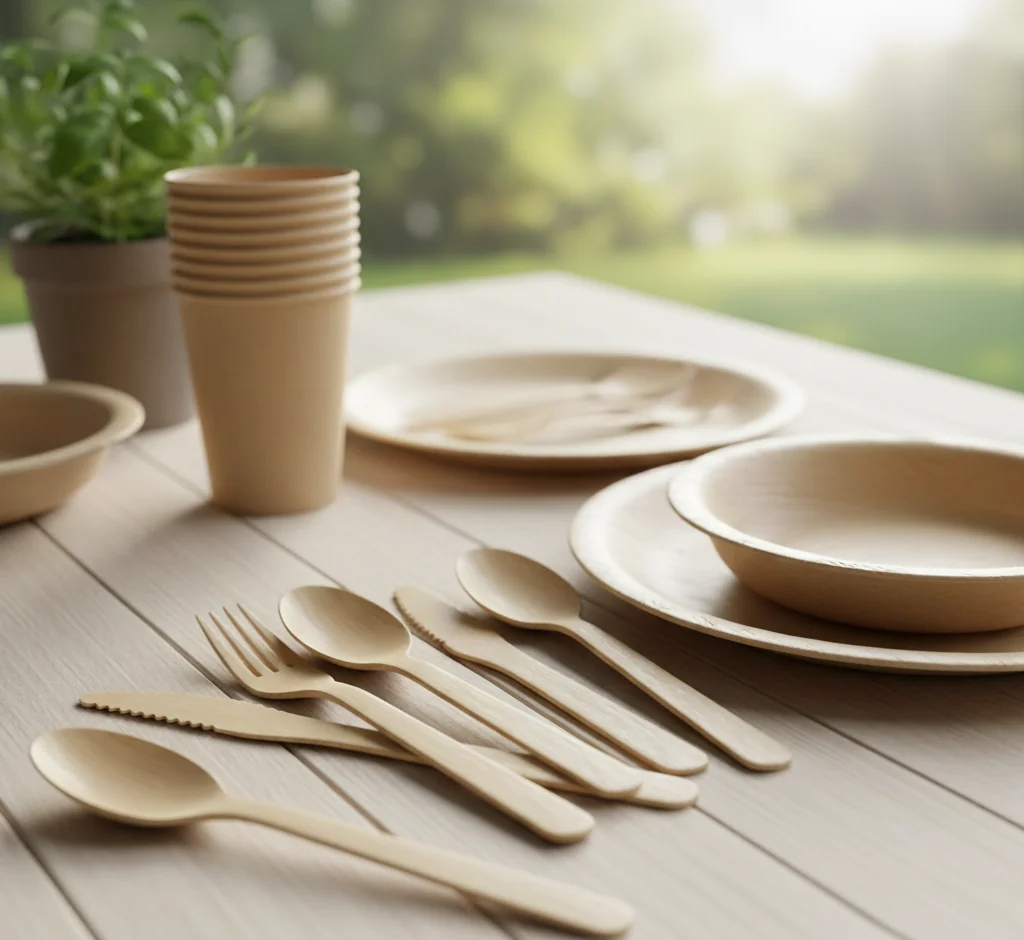
Varieties of Biodegradable Eco-Friendly Cutlery
There are different options for eco-friendly cutlery on the market, each adapted to specific needs in hospitality. Below are the main varieties, highlighting their uses, composition, and benefits.
PLA Cutlery: Uses and Benefits
PLA (polylactic acid) is a bioplastic derived from renewable resources such as cornstarch or sugarcane. This material is known for its high resistance and appearance similar to conventional plastic, but without the environmental drawbacks.
Main Advantages of PLA:
- Biodegradable and compostable in industrial facilities.
- Suitable for cold and warm foods.
- Smooth and pleasant surface.
- Maintains hygiene in fast food and catering services.
Using PLA cutlery is ideal for takeaway food services and events, complying with current regulations that restrict single-use plastics.
Bamboo Cutlery: Characteristics and Sustainability
Bamboo is a rapidly renewable material with excellent properties for making eco-friendly cutlery. It requires no pesticides or fertilizers, and its harvesting does not cause significant deforestation.
Outstanding Characteristics of Bamboo:
- Great resistance to use and moisture.
- Natural and elegant appearance.
- Compostable safely at home.
- No aggressive chemical treatments.
Bamboo cutlery is especially attractive at events, in hospitality, and catering, providing a respectful finish and sustainable image.
Wooden Cutlery: Options and Benefits
Eco-friendly wooden cutlery, generally made from birch or poplar, has become a common alternative in the industry. Its production process utilizes forest resources managed responsibly.
Advantages of Wooden Cutlery:
- Fully biodegradable and compostable in a short time.
- Suitable for all types of foods, even hot ones.
- Do not alter food taste.
- Pleasant touch and smooth finish.
These are available in different formats (spoons, forks, knives, stirrers) and are highly appreciated in home service and sustainable events.
Wheat Straw Cutlery: Composition and Applications
Wheat straw is obtained as a byproduct of agricultural production, reusing stems and inedible remnants. This alternative takes advantage of materials that would otherwise be discarded.
Properties of Wheat Straw Cutlery:
- Lightweight, durable, and hypoallergenic.
- Compostable and low environmental impact.
- Suitable for everyday use in hospitality.
They are recommended for catering, collectivities, and businesses seeking to minimize waste, contributing to the circular economy and comprehensive utilization of raw materials.
Each of these varieties of eco-friendly cutlery provides effective sustainability solutions without sacrificing functionality. Greenuso is committed to offering these options tailored to the various needs of hospitality, always opting for responsible innovation.
Eco-Friendly Cutlery in the Hospitality Industry
Advantages for Use in Restaurants, Bars, and Events
Eco-friendly cutlery offers numerous advantages for hospitality establishments and events. Replacing conventional cutlery with biodegradable options not only reduces environmental impact but also meets consumer demands for sustainability.
Main Advantages for the Industry:
- Reinforces the business’s environmental responsibility image.
- Adapt to high-traffic events thanks to their resistance and versatility.
- Promote compliance with current regulations on eliminating single-use plastics.
- Facilitate waste management, integrating into composting and recycling circuits.
The use of eco-friendly cutlery in restaurants, catering, and celebrations also conveys sustainable values to customers, increasing their trust and loyalty.
Criteria for Selecting the Right Cutlery for Each Establishment
Choosing the most convenient cutlery type depends on various factors associated with use, image, and service type. Establishments should consider:
- Type of food: For hot and prepared dishes, wooden and bamboo cutlery offer greater resistance. PLA is ideal for cold menus.
- Usage volume and occasions: In high-flow events or services, their lightness and durability facilitate effective handling.
- Budget: There are economically adjusted alternatives without compromising sustainability, such as wheat straw.
- Required sustainability level: If home compostability or chemical-free production is a priority, it’s crucial to review the certifications for each option.
- Image and presentation: Bamboo and wooden cutlery stand out at events seeking a careful and natural aesthetic.
Greenuso guides hospitality professionals in selecting eco-friendly cutlery, tailoring the offerings to each business’s needs and providing solutions aligned with new trends and industry demands.