
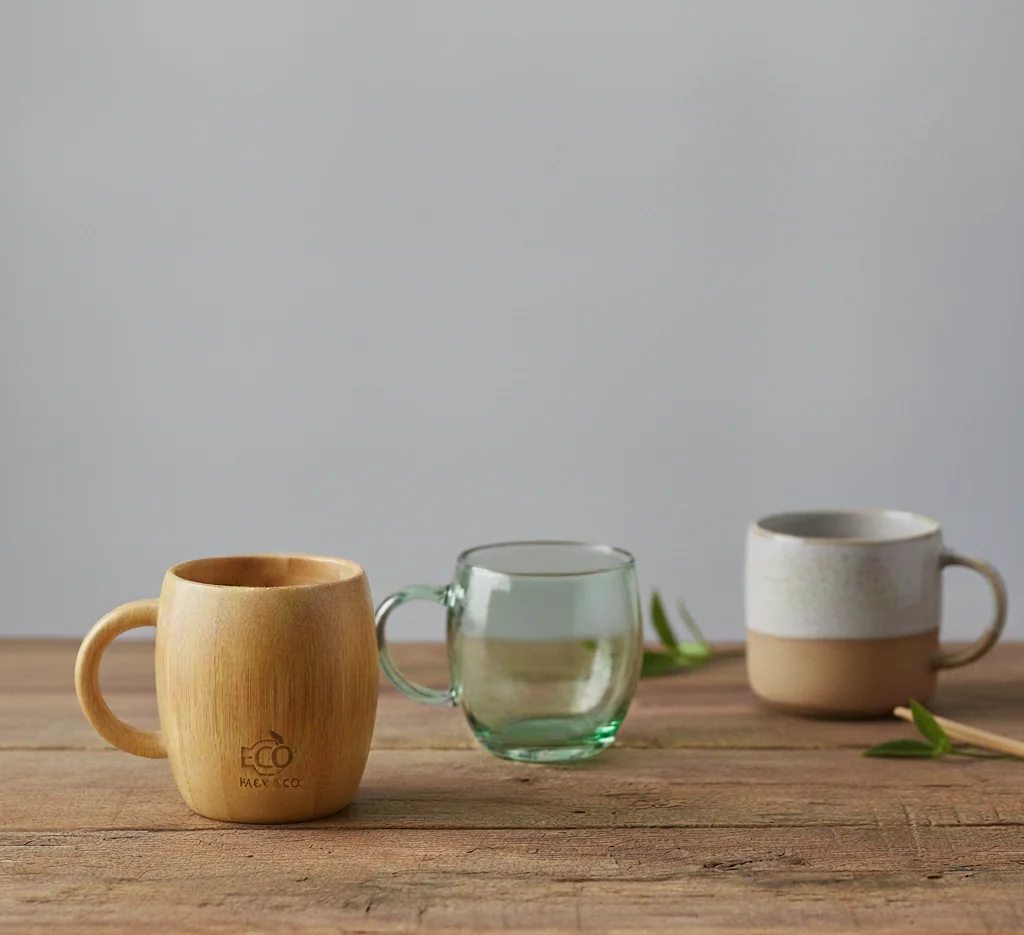
Choosing eco-friendly mugs makes a difference in daily life. Replacing single-use cups with sustainable alternatives helps reduce waste and protects the environment. Discover in this guide materials, designs, and tips for choosing responsible mugs that fit any style, both at home and in the office.
Eco-friendly mugs are distinguished by being designed with materials that have a low environmental impact and encourage responsible habits in daily consumption. These mugs replace the intensive production of plastic and other polluting materials with sustainable alternatives, intended for both personal and professional use.
Common Sustainable Materials
Eco-friendly mugs encompass a variety of materials selected for their low impact and durability:
- Ceramic: A durable and reusable material that withstands daily washing and use well. It does not release toxic substances and is accepted in recycling processes.
- Recycled Glass: Allows a second life for glass with an elegant and durable appearance, ideal for reuse and later recycling.
- Bamboo: A renewable resource from fast-growing crops. Lightweight and sturdy, it offers a natural alternative to traditional plastics.
- Stainless Steel: A durable, non-rust material that is 100% recyclable at the end of its life cycle. Suitable for hot and cold drinks and maintains temperature longer.
- Compostable PLA (polylactic acid): Derived from corn starch or sugarcane, it’s biodegradable under industrial composting conditions. It is an option for those looking for an alternative to conventional plastic while maintaining functionality and strength.
- Other Recycled Materials: Some mugs use recycled paper, natural fibers, or post-consumer waste, promoting the circular economy.
Choosing eco-friendly mugs involves an active attitude toward responsible consumption. Opting for products made from sustainable materials decreases dependence on fossil resources and promotes reuse, recycling, and compostability. With an eco-friendly mug, you contribute to zero waste goals, limit environmental pollution, and promote a healthier and more conscious lifestyle. In addition, using them demonstrates a commitment to protecting the environment and reducing environmental impact in front of clients, guests, and the community.
Advantages of Sustainable Materials
Eco-friendly mugs present significant advantages over conventional plastic or treated paper products. Choosing sustainable materials guarantees safety, durability, and a real reduction in environmental impact.
Benefits by Material
- Ceramic: Offers high durability and resistance to daily use. Does not release toxic substances nor alter the taste of beverages. Its prolonged lifespan allows continuous use, and its material is accepted in recycling processes.
- Recycled Glass: Maintains the robustness of glass and contributes to reusing existing resources. These mugs are recyclable and easily washable, ideal for multiple uses without degradation.
- Bamboo: Sourced from renewable sources and grows rapidly without agrochemicals. It’s lightweight, drop-resistant, and biodegradable at the end of its lifespan.
- Stainless Steel: Highlights for its long lifespan and ease of cleaning, without retaining odors or flavors. It’s 100% recyclable when no longer needed.
- Compostable PLA: Made from plant resources, it degrades under industrial composting conditions. Ideal for those looking to reduce waste but require practical, lightweight products.
- Fibers and Other Recyclables: Add value by giving new life to already used materials, boosting the circular economy and efficient use of resources.
Comparison with Common Materials
Conventional materials like plastic or expanded polystyrene often release unwanted substances when heated and their recycling is limited. In contrast, sustainable materials are safe for health, possess a lower carbon footprint in production, and can be reincorporated into the production cycle after use. A ceramic mug can last for years in household or office use, while a plastic one is usually discarded after a few uses.
Life Cycle of eco-friendly mugs products
Opting for eco-friendly mugs extends the useful life cycle of each container. From raw material extraction to final recycling or composting, low environmental impact in transportation and manufacturing is prioritized. The design of these products seeks maximum reuse and waste reduction, closing the loop with responsible recycling or biodegradation.
Integrating eco-friendly mugs into the daily routine is an investment in health, sustainability, and social responsibility. These advantages make them a preferred option for those committed to a more environmentally friendly lifestyle.
Custom Designs for Eco-Friendly Mugs
Eco-friendly mugs stand out not only for their sustainability but also for their versatility in design. These mugs allow for a high degree of customization, adapting to the needs of businesses, events, and individuals seeking to convey responsible values without sacrificing personal identity.
Customization and Design Options
- Engravings and Screen Printing: Techniques like laser engraving, screen printing, or color printing can be applied to materials like ceramic, recycled glass, or stainless steel. The mugs are designed with messages, initials, logos, or illustrations.
- Colors and Shapes: Options with matte or glossy finishes, different shapes, and material combinations exist, facilitating integration into any setting: from modern offices to family celebrations.
- Accessories and Complements: Some personalized eco-friendly mugs include lids, colored handles, or sleeves. These details increase design diversity and enhance the user experience.
Uses for Businesses and Individuals
- Businesses and Corporate Events: Customizing eco-friendly mugs with the company logo reinforces its image of environmental responsibility. They are common as promotional gifts at fairs, conferences, and internal campaigns to encourage the use of reusable products.
- Personalized Gifts: For individuals, eco-friendly mugs are a practical and original option. Personalizing them with names, special dates, or messages turns each piece into a unique memory for weddings, birthdays, or special celebrations.

Benefits of Using Eco-friendly Mugs
The use of eco-friendly mugs offers advantages at both the environmental and social and business levels. Adapting such products into daily life or business strategy responds to a growing trend towards more conscious and sustainable consumption.
Reducing Environmental Impact and Promoting the Circular Economy
- Less Waste: Eco-friendly mugs, being reusable or compostable, decrease solid waste from disposable product use.
- Use of Recycled Resources: Their production from recycled materials, like glass or plant fibers, helps reintegrate already used resources into new production cycles.
- Compostability: Models made of PLA, natural fibers, or biodegradable cardboard can return to nature as compost, avoiding plastic accumulation in landfills.
- Active Contribution to the Circular Economy: They promote reuse and recycling, driving a system where the value of products is maintained as long as possible.
Advantages in Marketing and Corporate Gifts
- Sustainable Image: Companies or organizations incorporating personalized eco-friendly mugs reinforce their environmental commitment and enhance their reputation.
- Corporate Identity: Personalizing these products with logos conveys green values within and outside the company.
- Valued Gifts: They are perceived as useful and responsible gifts in promotional campaigns and as company gifts, events, or loyalty programs.
- Differentiation: An eco-friendly mug stands out compared to traditional promotional items, providing tangible added value aligned with current consumer and collaborator expectations.
Incorporating eco-friendly mugs into daily life or brand strategy is a direct commitment to sustainability and respect for the environment, with a real and positive impact on each action.
Maintenance of Eco-Friendly Mugs
Proper maintenance of eco-friendly mugs is essential to prolong their lifespan and maintain their sustainable properties. Each material requires specific care, but appropriate cleaning ensures hygiene and extends durability, in addition to facilitating recycling or composting at the end of their use cycle.
Care Tips by Material
- Ceramic: Dishwasher and daily use resistant. Avoid sudden temperature changes and strong impacts to prevent cracks.
- Recycled Glass: Dishwasher safe, though hand washing is recommended to preserve its shine and transparency. Handle carefully to avoid breakage.
- Bamboo and Natural Fibers: Hand wash with lukewarm water and mild soap. Do not leave soaked for long periods or use microwaves, as moisture can shorten their lifespan.
- Stainless Steel: Easy to clean, both by hand and in the dishwasher. Dry well after washing to avoid spots and maintain its original appearance.
- Compostable PLA and Biodegradable Materials: Hand wash, avoiding hot water or abrasive products. Air dry and store in a cool place.
Estimated Lifespan
The lifespan of eco-friendly mugs depends both on the material and the care applied:
- Ceramic and Stainless Steel: Can last several years without losing functionality.
- Recycled Glass: Its resistance provides long periods of use, barring impacts or falls.
- Bamboo and Fibers: Estimated one to two years under normal conditions.
- PLA and Compostables: Between six months and one year in regular domestic use.
Proper care maximizes the number of uses and reduces the need for replacement, favoring responsible habits.
What Does Biodegradability Mean for Eco-Friendly Mugs?
Biodegradability refers to the material’s ability to naturally decompose, transforming into harmless elements for the environment. A biodegradable eco-friendly mug is made with compounds like PLA, plant fibers, or cardboard without plastic layers, allowing it to degrade in composting conditions in a few months without leaving polluting residues.
What are the Most Recommended Materials?
Ceramic: Ideal for daily use at home or offices, very resistant and non-toxic.
Recycled Glass: Provides durability and facilitates reuse and recycling.
Bamboo and Natural Fibers: A lightweight and compostable option, perfect for those who prioritize biodegradability.
Stainless Steel: Recommended for its long lifespan and impact resistance.
PLA (polylactic acid): Compostable bioplastic, suitable for those seeking alternatives without conventional plastic.