
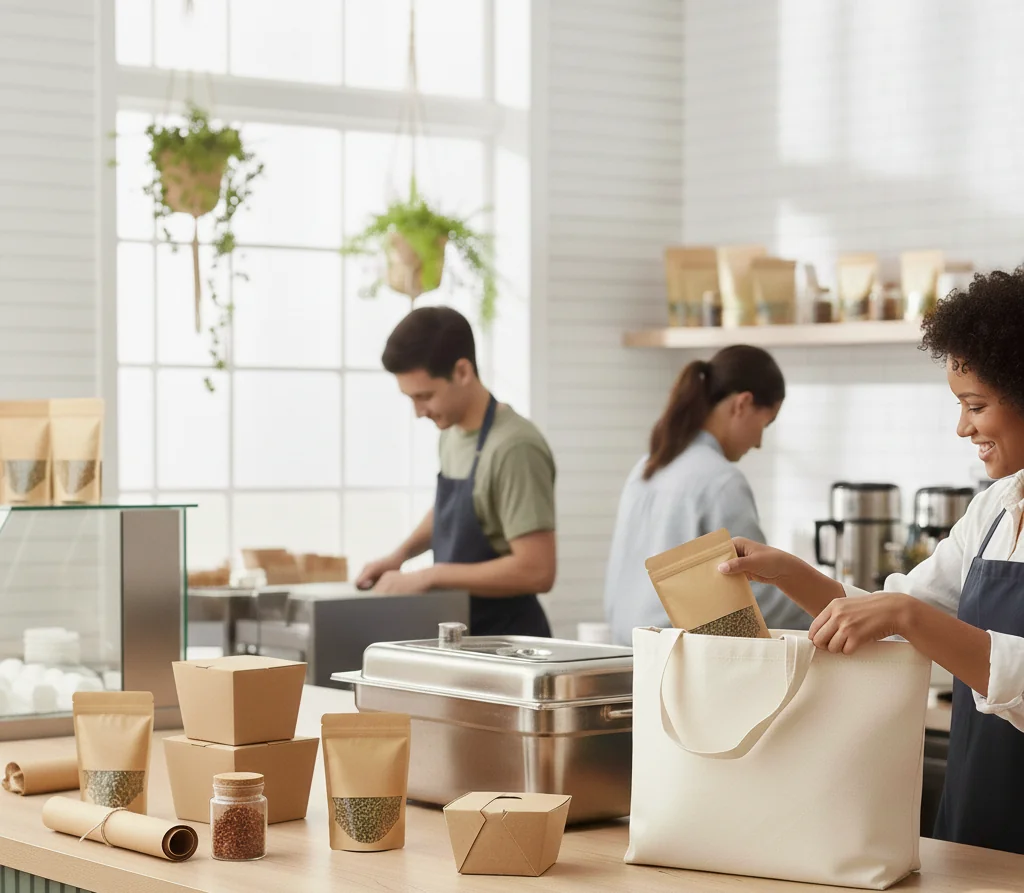
The use of eco-friendly packaging for food is growing in hospitality, shops, and catering. Choosing sustainable packaging helps reduce waste and protects the environment. In this guide, you will discover the types of materials, benefits, and the most practical options for your business.
Characteristics of Eco-Friendly food packaging
Differences between Biodegradable and Compostable
Not all eco-friendly packaging for food offers the same environmental impact after use. A biodegradable package is one that, thanks to the action of living organisms, breaks down into natural elements like water, carbon dioxide, and biomass. The time it takes to degrade can vary depending on the material and environmental conditions and does not always generate a useful final product for the soil.
On the other hand, compostable packaging, in addition to being biodegradable, is designed to transform into compost through controlled temperature and humidity processes. This process is completed in a short period, usually less than 12 weeks in industrial facilities, generating quality compost without toxic residues. Only packages that meet the European standard EN 13432 can be considered truly compostable.
- Biodegradable: Degrades under natural conditions, but the rate and result can vary.
- Compostable: Always generates useful and safe compost, under specific conditions and in a short time.
Most Used Materials: Plant Fibers, Sugarcane, Eco Cardboard, Cellulose
Eco-friendly packaging for food uses renewable materials with low environmental impact. The most common are:
- Plant Fibers: Plant remains such as wheat, rice, or corn. They are strong, lightweight, and suitable for contact with hot or cold foods. They facilitate rapid decomposition.
- Sugarcane (bagasse): A byproduct of sugarcane pressing, used for trays, plates, and boxes. Its resistance to fats and heat makes it ideal for prepared menus. It is compostable and utilizes agricultural waste.
- Eco Cardboard: Produced from virgin or recycled fibers, often with a plant coating to increase its resistance to liquids and oils. It allows for printing and customization.
- Cellulose: Base material for many types of biodegradable and compostable packaging. It obtains its strength and appearance from the treatment of plant fibers, without harmful chemical treatments.
The combination of these materials in various shapes and formats allows meeting the needs of the food sector and complying with the new sustainability standards demanded by consumers and European legislation.
Advantages of Using Eco-Friendly Packaging in Food
Positive Impact on the Environment
Using eco-friendly packaging for food helps reduce the accumulation of plastics and other non-biodegradable waste. These packages, made from renewable materials, integrate into biodegradation or composting processes that return useful resources to the environment. This choice helps reduce the carbon footprint and depletion of fossil raw materials. It also promotes the circular economy and compliance with European regulations aimed at restricting single-use packaging.
Among the main environmental benefits are:
- Significant reduction of plastic waste volume in landfills and natural environments.
- Utilization of agricultural by-products and plant fibers.
- Facilitates the conversion of waste into compost or energy.
Benefits for Health and Food Safety
Eco-friendly packaging for food avoids harmful chemicals, such as phthalates or BPA, present in many conventional plastics. This protects food from the migration of toxic components and ensures safe direct contact, suitable for both hot and cold preparations. Additionally, the structure of these materials prevents the transmission of unwanted odors or flavors and favors optimal preservation conditions.
Advantages for the consumer:
- Elimination of risks associated with toxins and contaminants.
- Maintains the quality, taste, and freshness of food.
- Hygienic and safe solutions for transport and consumption.
Enhanced Brand Perception Among Sustainable Customers
Opting for eco-friendly packaging for food positions businesses and restaurants as entities committed to sustainability. Customers value the reduced environmental impact and associate the use of sustainable packaging with responsibility and quality. This commitment can translate into greater loyalty, recommendations, and a differentiating image in increasingly conscious markets.
Key aspects for brand image:
- Enhancing reputation and attracting responsible consumers.
- Differentiation from companies still using traditional packaging.
- Contributes to a shopping experience aligned with the current public’s sustainable values.
The move towards eco-friendly packaging in food not only impacts the environmental and regulatory level but also strengthens the relationship between companies and their customers, consolidating a proposal based on respect for the environment and health.
Business Benefits of Using Eco-Friendly and Biodegradable Packaging
Competitive Advantage for Foodservice and Catering Businesses
Implementing eco-friendly packaging for food differentiates businesses in a market where sustainability is increasingly valued by customers and regulators. By opting for environmentally friendly solutions, restaurants, bars, and catering companies respond to social demand and current regulations that restrict the use of conventional plastics.
Main competitive advantages:
- Legislative compliance: Anticipating European legal requirements avoids penalties and facilitates adaptation to new standards.
- Attracting responsible customers: Increased trust and loyalty from those seeking experiences aligned with their sustainable values.
- Positive reputation: Improves business perception, differentiating it from competitors and positioning the brand as a reference in environmental responsibility.
How to Boost Your Business with Sustainable Solutions
Choosing eco-friendly packaging for food not only reduces environmental impact but can also become a lever for growth and visibility for the business. Adopting these packages also means investing in quality and food safety, aspects that consumers value more and more.
Recommendations to enhance results:
- Communicate sustainability: Explain the ecological origin of your packaging in menus, labels, or social networks.
- Choose packaging tailored to each product: Prioritize materials and formats that suit the characteristics of the food, ensuring freshness and presentation.
- Train the team: Communicate the ecological advantages and correct usage methods to all staff so they become ambassadors of the environmental commitment.
- Collaborate with recycling and composting systems: Make it easier for your customers to return or find the most suitable final treatment for used packaging.
Businesses like Greenuso have demonstrated that incorporating biodegradable and compostable packaging increases profitability, visibility, and customer satisfaction, generating new opportunities in an increasingly sustainable and competitive environment.
Types of Eco-Friendly and Biodegradable Packaging Available
Sugarcane Fiber Packaging
Packaging made from sugarcane fiber, or bagasse, stands out for being compostable and suitable for direct contact with all types of food, including hot and greasy ones. They provide excellent mechanical resistance and are ideal for prepared meals, takeout, and catering services. Since sugarcane is an agricultural byproduct, it uses up excess residue after juice extraction, reducing the consumption of additional resources. This material withstands microwave and refrigeration use and transforms into compost in industrial plants in less than three months after its useful life ends, closing the sustainable cycle without generating toxic waste.
Main advantages:
- Industrial compostability and efficient biodegradation.
- Resistance to fats, oils, and high temperatures.
- Suitable for microwaves and refrigeration.
- High rigidity, recommended for plates, trays, and prepared food packaging.
Eco Bamboo Cardboard Packaging
Eco-friendly cardboard enriched with bamboo fibers offers a lightweight, durable, and 100% compostable solution. Bamboo is a fast-growing plant with low water consumption, ensuring sustainable production. These packages are suitable for cold, hot, and even liquid foods, thanks to plant coatings that improve impermeability and prevent leaks. Additionally, they allow for easy personalization with messages or brand images, adding value to everyday use in restaurants or takeout businesses.
Main advantages:
- Renewable origin and minimal environmental impact in cultivation.
- Excellent performance against oils, liquids, and hot foods.
- Customizable printing options to highlight ecological commitment.
- Easy to recycle and compost after use.
Both types of eco-friendly packaging for food represent an effective response to the demand for sustainable solutions. The use of sugarcane fiber and eco bamboo cardboard guarantees functionality, environmental respect, and adaptation to the logistical needs of modern catering, takeout, and delivery.
Selection of Eco-Friendly Packaging Based on Food Type
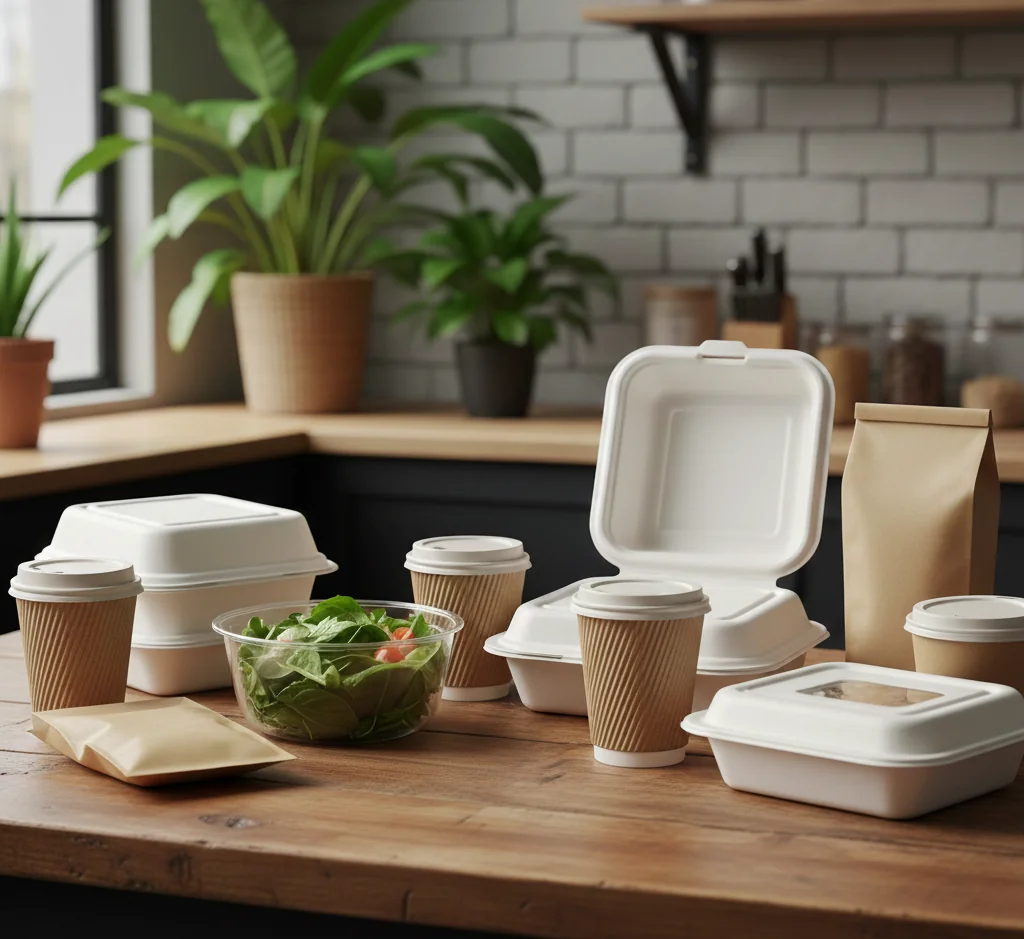
Choosing the right eco-friendly packaging for food according to the nature of the food ensures safety, preservation, and sustainability. Formats and materials evolve to adapt to each need of catering and delivery, preventing leaks and maintaining the quality of the final product.
Packaging for Liquids and Soups
For soups, creams, and broths, the packaging must be resistant to moisture and high temperatures. Cups and tubs made from eco-friendly cardboard or plant fibers with a plant coating offer impermeability and maintain temperature. These options:
- Include secure lids for transport.
- Prevent leaks and drips during delivery.
- Allow microwave and refrigeration use without losing integrity.
Leak-Proof Packaging for Prepared Meals
Dishes with sauces, stews, or combined menus require robust, well-sealed packaging. Trays made of sugarcane fiber or reinforced cardboard ensure:
- Hermetic sealing to prevent spills of liquids and oils.
- Internal compartments that facilitate the separation of ingredients or sides.
- Resistance to hot temperatures without deformation.
These formats are suitable for delivery, takeout, and catering, maintaining presentation and flavor intact until consumption.
Packaging for Delivery, Takeout, and Events
The rise of off-premises consumption demands lightweight, stackable, and easy-to-transport eco-friendly packaging. Boxes, bags, and customizable packages made of biodegradable or compostable materials are key because:
- They provide a secure closure for transport.
- Support customization to convey the company’s sustainable values.
- Are available in multiple sizes and formats depending on the food: burgers, sandwiches, salads, prepared dishes, etc.
In events and catering services, using biodegradable trays and cutlery completes the ecological proposal, reinforcing the brand’s committed image in front of an increasingly demanding audience.
Choosing the right eco-friendly packaging for each use is essential to protect the food, reduce environmental impact, and add value to the customer experience in any consumption mode.
Final Recommendations for Restaurants, Catering, and Stores
To fully exploit the benefits of eco-friendly packaging for food, it is important to integrate sustainability into the business strategy and daily communication.
Key recommendations:
- Choose certified materials adapted to each type of food to ensure functionality and environmental respect.
- Inform customers about the added value of using eco-friendly packaging, both in physical shops and in delivery or events.
- Participate in and promote responsible waste management practices (composting, recycling, selective collection).
- Train staff to correctly convey and apply the advantages of sustainable packaging.
- Involve suppliers and collaborators in the ecological transition, reinforcing a coherent and solid value chain.
Businesses like Greenuso demonstrate that the use of eco-friendly packaging is not only a commitment to the environment but also an opportunity for growth, innovation, and connection with customers seeking more responsible consumption. Betting on sustainable packaging is betting on the future of the sector.
We wish you a Happy New Year✨🥂