

Eco-friendly paper cups have become a real alternative for events, offices, and establishments seeking to reduce their environmental impact. Their manufacturing and transportation processes are aimed at reducing CO2 emissions, thanks to the use of recycled materials and cleaner methods. Adopting these kinds of products allows both companies and consumers to make decisions aligned with environmental protection.
Features of Eco-friendly Paper Cups
Eco-friendly paper cups are made from cellulose fibers sourced from responsibly managed forests or recycled raw materials. They have a structure that is resistant to heat and moisture, making them suitable for both cold and hot beverages. Being biodegradable and often compostable, they integrate into natural cycles without leaving permanent residues. Many of these cups have environmental certifications that guarantee their sustainable origin and reduced emissions throughout the manufacturing and transportation chain.
Their benefits include:
- No conventional plastics in their composition.
- Quick decomposition under controlled composting conditions.
- Suitability for food contact, ensuring user safety.
- Design aimed at facilitating recycling after use.
Differences Compared to Traditional Plastic Cups
Unlike traditional plastic cups, eco-friendly paper cups do not generate microplastics nor take centuries to degrade. Plastic cups, though lightweight and cost-effective, significantly contribute to soil and water contamination due to their environmental persistence. Additionally, large amounts of CO2 are emitted during plastic manufacturing, whereas paper, especially if recycled, significantly reduces emissions. Paper can be recycled or composted at the end of its life, thus decreasing landfill waste volume.
Comparison with Other Alternatives: Bioplastic and Common Paper
Regarding bioplastic cups, although they boast a plant-based origin and better credentials than conventional plastic, their composting process requires specific industrial facilities and, if they end up in the environment, decomposition can be delayed. Moreover, not all recycling systems accept bioplastics, complicating their responsible management.
Compared to common paper, eco-friendly paper cups offer greater strength and food safety. While paper tends to soak and lose rigidity when in contact with liquids, the cardboard used in these cups undergoes special treatments—such as biodegradable coatings—to maintain their integrity and functionality during use. This difference ensures their viability for multiple environments where sustainability and hygiene are prioritized.
Collectively, eco-friendly paper cups offer the most balanced combination of performance, environmental sustainability, and ease of integration into current recycling flows, positioning themselves as the preferred alternative to reduce the ecological footprint of events, businesses, and daily consumption.
Benefits of Sustainable Production
The sustainable production of eco-friendly paper cups adds value from the source of the raw material to its responsible disposal. This results in a lower environmental impact throughout its life cycle.
Use of Recycled Cardboard and Biodegradable Properties
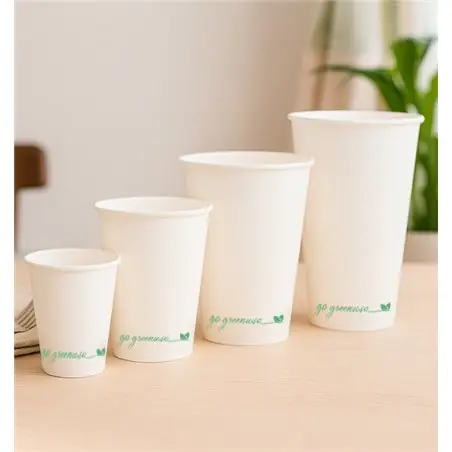
A key element is the use of recycled cardboard or sourced from controlled origins, reducing the demand for new resources and limiting pressure on ecosystems. These cups feature biodegradable properties, integrating into the natural environment quickly if properly managed. Unlike other materials, cardboard transforms into nutrients without leaving harmful residues, facilitating the circular economy. Furthermore, recycling and composting processes benefit from the low presence of additives and persistent chemicals.
Environmentally Friendly Manufacturing Processes
The manufacturing of eco-friendly paper cups implements energy-efficient and water-saving techniques, minimizing waste generation during production. Priority is given to reducing CO2 emissions through the use of renewable energies and controlling the environmental footprint throughout the supply chain. Production adapts to sustainable regulations that demand strict traceability criteria, use of certified fibers, and reduction of plastics—if any coating is used, it is plant-based and compostable.
Optimization of Resource Use and Waste Management
At every stage, resources are optimized both material and energy: designed to occupy less volume in transport, lightweight materials and compact packaging. This also optimizes storage and reduces delivery frequency, contributing to a decrease in emissions during transport. After use, eco-friendly paper cups can be recycled with other paper waste or, in many cases, industrially composted. This efficient waste management reinforces the benefits of sustainable production and encourages responsible habits in companies and consumers committed to the environment.
In summary, the sustainable production of these cups represents a significant reduction in ecological impact, favoring the circular economy and decreasing CO2 emissions both in manufacturing and logistics.
Environmental and Transportation Benefits
The choice of eco-friendly paper cups is not only relevant in their manufacture but also has a strong impact across the entire value chain, particularly in transportation and the reduction of associated CO2 emissions.
Reduction of CO2 Emissions Thanks to Optimized Transport
Cardboard, due to its lightweight and stackable design, allows large quantities of product to be transported occupying less space. This reduces the number of necessary trips and decreases fuel consumption, resulting in a direct reduction of CO2 emissions. Manufacturing more compact and foldable cups reduces the logistical footprint compared to bulkier options like traditional plastic.
Lower Carbon Footprint Compared to Other Options
Eco-friendly paper cups, sourced either recycled or certified, present a lower carbon footprint throughout their lifecycle. The production of cardboard requires less energy and emits fewer greenhouse gases than petroleum derivatives. Furthermore, their ability to degrade or be recycled helps prevent waste buildup, which generally does not occur with poorly managed plastics or bioplastics. This positive carbon balance makes paper cups one of the most environmentally friendly alternatives.
Focus on Sustainable Packaging and Logistics
The packaging of these cups prioritizes recyclable materials and minimizes the use of unnecessary elements. Sustainable logistics involves streamlined distribution processes, optimized routes, and clean transport options when possible. All this planning contributes to a more ecological supply chain. Additionally, cardboard allows integration of messages and signals about recycling on the packaging, facilitating the proper disposal of products.
In synthesis, the use of eco-friendly paper cups supports the sustainability of production and offers concrete benefits in the transportation sector: fewer emissions, lower global impact, and active participation in responsible logistics models. This brings both companies and consumers closer to an effective reduction in the environmental footprint.
Positive Impacts and Sustainability
The use of eco-friendly paper cups generates a series of positive effects that contribute to the planet’s sustainability and the advancement towards more responsible consumption models.
Contribution to Plastics Waste Reduction
The adoption of eco-friendly paper cups directly helps to decrease the presence of single-use plastics in the environment. Cardboard, being biodegradable and recyclable, naturally decomposes without leaving polluting residues, preventing the accumulation of persistent waste that affects soils, seas, and ecosystems. This change reduces the volume of plastic waste, which is one of the main environmental threats today. Additionally, cardboard requires less time and energy to reintegrate into natural cycles, generating less impact than conventional plastic or even bioplastic in unsuitable conditions.
Alignment with Circular Economy Principles
Eco-friendly paper cups perfectly fit into the circular economy due to their capability to be recycled and often being made from already recovered material. After use, they can be reincorporated as raw material to manufacture new products, closing the cycle and avoiding resource waste. This approach encourages sustainable production, reduces the need to extract virgin raw materials, and limits unnecessary waste. The cardboard’s lifecycle, from its origin to recycling or composting, exemplifies efficient resource management aligned with current sustainability challenges.
Strengthening Environmental Sustainability and Planet Health
By using eco-friendly paper cups, businesses and consumers contribute to strengthening environmental sustainability. The ecological footprint is reduced not only during production but also in transportation and disposal phases. The impact is observed in improved environmental quality, reduced pollutant emissions, and the promotion of responsible practices. Choosing ecological alternatives like cardboard also raises awareness among the population about the importance of consuming consciously, fostering respectful lifestyles towards the planet’s health and society.
In summary, eco-friendly paper cups go beyond merely substituting plastic. Their use represents a real commitment to waste reduction, the circular economy, and the protection of ecosystems. This decision drives change towards a more sustainable and responsible society.
Guide to Responsible Consumption
Responsible consumption of eco-friendly paper cups implies choosing certified products, applying good practices in their use, and fostering sustainable habits both individually and corporately.
Identification of Certified Eco-friendly Cups
To ensure a lower environmental impact, it is important to opt for cups with recognized certifications that confirm the sustainable origin of the cardboard, its biodegradable or compostable nature, and the absence of toxic materials. Some key labels include sustainable forest management, industrial compostability, or recyclability. These certifications ensure that products meet stringent environmental standards, promoting the circular economy.
When choosing eco-friendly cups, it is advisable to review:
- Presence of environmental certification labels.
- Information about the composition and origins of the cardboard.
- Assurance that the product is compostable or recyclable after use.
Practices for Responsible Use and Recycling
An eco-friendly cup only fulfills its purpose if used and disposed of correctly. To achieve this:
- Use the cups according to recommendations regarding capacity and temperature, avoiding exceeding the intended use.
- Separate waste after consumption, placing cups in the paper container or specific composting facilities, according to local guidelines and the type of coating of the cup.
- Reduce waste by reusing cups on multiple occasions whenever usage allows without compromising hygiene.
- Avoid contaminating them with other residues, to ensure proper recycling or composting.
Specific Tips for Companies and Conscious Consumers
Companies and consumers play a key role in adopting sustainable solutions:
- Companies: Include certified eco-friendly cups in your events, offices, and products for clients. Educate employees and attendees on correct waste separation and promote responsible purchasing from suppliers committed to sustainability.
- Consumers: Prioritize using products with clear information about their origin and recyclability. Encourage reuse when feasible and actively collaborate by disposing of each waste into the appropriate container.
Promoting conscious and responsible habits when consuming eco-friendly paper cups contributes to the goal of reducing CO2 emissions, optimizing resources, and protecting the environment, aligning each small daily decision with sustainability values.